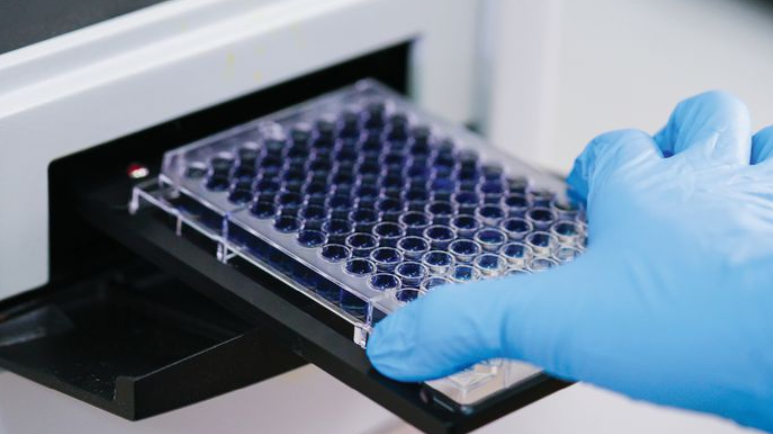
An ELISA plate reader is a lab device that measures color or light signals from ELISA tests. It helps detect proteins, antibodies, and other biomolecules with accuracy. Because it processes many samples at once, it is widely used in medical, research, and pharmaceutical labs.
The ELISA plate reader works by shining specific light into each well and measuring how the sample reacts. Its software then converts these readings into clear results. This makes the device essential for fast, reliable, and precise testing in modern laboratories.
Understanding What an ELISA Plate Reader Does
An elisa plate reader is a laboratory instrument used to measure the optical signals produced during an ELISA assay. These signals indicate how antibodies and antigens interact inside microplate wells, allowing researchers to quantify proteins, hormones, pathogens, and other biomarkers. The device makes it possible to process dozens of samples simultaneously with accuracy far higher than manual observation. A major reason laboratories trust the elisa plate reader is its ability to deliver consistent measurements, even when sample sizes are extremely small. It eliminates the risk of human error and ensures repeatability—two requirements that modern research cannot compromise. Since ELISA tests are widely used in medical diagnosis, pharmaceutical analysis, and biotechnology, the reliability of the elisa plate reader directly affects result quality. This makes the instrument an essential component of any professional lab.
See also: The Benefits of Nora Recessed Lighting for Modern Home Design
How an ELISA Plate Reader Works: Step-by-Step Overview
The working principle of an elisa plate reader is based on analyzing how light interacts with samples inside microplates. Each well contains a reaction mixture that changes color or emits light when enzymes react with specific substrates. The reader shines controlled wavelengths of light into these wells and measures the intensity of the transmitted or emitted signals. These values reflect the concentration of the target analyte. Most systems include a light source, optical filters, a detector, and software that converts readings into meaningful data. While the design seems simple, the precision involved is extremely high. A small deviation in wavelength or signal detection can alter results, which is why laboratories depend on the stability of an elisa plate reader for clinical and research accuracy. This automated measurement process speeds up workflows and reduces variability, making ELISA testing both reliable and scalable.
Major Components of an ELISA Plate Reader
An elisa plate reader includes several core components that work together to ensure accurate detection:
- Light Source: Provides stable and consistent illumination.
- Optical Filters: Select the correct wavelength for analysis.
- Plate Holder: Positions wells precisely under the light path.
- Detector: Converts light into measurable electrical signals.
- Software: Processes data, creates curves, and calculates results.
These components operate in synchronization, ensuring that each well receives identical treatment. The optical filters and detectors are particularly important because the sensitivity of the elisa plate reader depends on them. High-quality filters ensure correct wavelength selection, while sensitive detectors identify even minimal signal changes. This combination results in reliable numerical output that can be used for diagnostics, research interpretation, or quality control. The system design also allows the instrument to handle multiple assays without requiring specialized calibration for each test.
Types of ELISA Plate Readers
ELISA plate readers come in several types, each designed to meet different testing needs in research and clinical laboratories. Although all models measure signals produced during ELISA assays, their sensitivity, detection method, and overall capabilities vary. Some readers are simple and ideal for routine testing, while others offer advanced features for detailed scientific analysis. Choosing the right type depends on the assay format, required sensitivity, and workflow demands.
Types of ELISA Plate Readers
- Absorbance Reader: Measures color changes; best for standard ELISA tests.
- Fluorescence Reader: Detects fluorescent signals with higher sensitivity.
- Luminescence Reader: Measures light emission for low-level analytes.
- Multimode Reader: Combines absorbance, fluorescence, and luminescence in one device.
Applications of ELISA Plate Readers in Scientific and Medical Fields
The elisa plate reader plays a central role in several scientific industries because of its ability to detect specific biological interactions. In medical diagnostics, it helps identify infections, autoimmune disorders, and hormonal imbalances. Hospitals rely on ELISA tests for conditions like HIV, hepatitis, and allergy screening. In pharmaceutical research, the device assists in measuring drug response, toxicity levels, and biomarker concentration. Food safety laboratories use the reader to detect contaminants, allergens, or pathogens in processed goods. Environmental scientists depend on ELISA testing to monitor pollutants and evaluate ecosystem changes. Because the elisa plate reader offers high throughput, it allows professionals to evaluate numerous samples at once, improving overall efficiency. This broad range of applications highlights the instrument’s importance in both clinical and research environments.
Features to Consider When Choosing an ELISA Plate Reader
When choosing an ELISA plate reader, it is important to focus on features that ensure reliability, flexibility, and accurate performance. A good reader should offer a suitable wavelength range, fast reading speed, and high detection sensitivity to support different assay types. Plate format compatibility is also important, especially for labs handling large sample volumes. Strong software capabilities, such as curve fitting, data export, and automated calculations, make analysis easier and more efficient. Finally, consider long-term maintenance, calibration support, and overall build quality to ensure consistent and dependable results over time.
Common Mistakes to Avoid When Using an ELISA Plate Reader
While the elisa plate reader is designed for simplicity, mistakes during preparation or measurement can affect results. Common issues include improper pipetting, inconsistent washing, using expired reagents, or selecting incorrect wavelengths. Bubbles in wells may interrupt the light path, causing inaccurate readings. Temperature variations also affect enzyme reactions, so allowing plates to reach room temperature is critical. Another frequent error is skipping regular calibration, which can shift readings over time. Laboratories must follow consistent protocols and maintain the equipment properly to ensure long-term accuracy. When operators avoid these mistakes, the elisa plate reader delivers highly reliable data suitable for diagnostic and research use. These preventive measures keep performance stable and reduce the need for repeat testing.
Future Advancements in ELISA Plate Reader Technology
Emerging technologies are making the elisa plate reader more efficient, sensitive, and user-friendly. AI-driven software is expected to automate data interpretation, reducing the need for manual curve adjustments. Faster optical systems will deliver quicker readings without compromising accuracy. Compact models will support small laboratories with limited bench space.
Another major area of innovation is cloud connectivity. Future ELISA readers may automatically upload results to secure databases, enabling remote collaboration and reducing paperwork. Improvements in optical sensors and filter technology will also increase detection precision. These advancements will make the elisa plate reader more powerful and adaptable to the growing demands of scientific research.
Conclusion
The elisa plate reader is an essential instrument for laboratories that perform immunoassays, disease diagnostics, pharmaceutical research, and environmental studies. Its ability to provide accurate, fast, and high-throughput results makes it indispensable in modern science. By understanding how it works, recognizing its features, and avoiding common mistakes, laboratories can ensure long-term reliability and precision. As technology evolves, the elisa plate reader will continue to play a major role in global research and clinical testing.